The first thing I learned from publishing Hopscotch is that the hardest part of editing a child's writing is stopping.
Not stopping because there is nothing to do. Stopping because the things you want to do would make the book worse.
The rule that was harder than it sounds
We had one editorial principle going in: edit the grammar, never the voice. Say it out loud and it seems obvious. In practice it meant catching our own reflexes, constantly. There is a professional instinct to smooth a sentence, to standardise an odd turn of phrase, to make a young writer sound more polished. And polish, in this case, would have been damage.
Aanya Taneja, who is 11, writes with the urgency of someone who needs you to care about the people in her story. Aarjav Amit Singh, who is 9, notices what other writers walk past: the small, telling detail that makes a scene feel real. Those are not things we gave them. They are what they walked in with. Smooth either out and you lose the writer.
What we chose not to provide
We did not brief the 9 children with a theme. We asked what they wanted to write, then got out of the way. What came back was genuinely varied. Manyu Dhiraj Bhandary had been to Kenya and turned that trip into a story rooted in the feel of that actual place. Nikunj Anand built science-fantasy, which is harder to sustain than it looks. Ridhvi Bansal kept writing about people coming together to protect something shared, which is the idea she returns to.
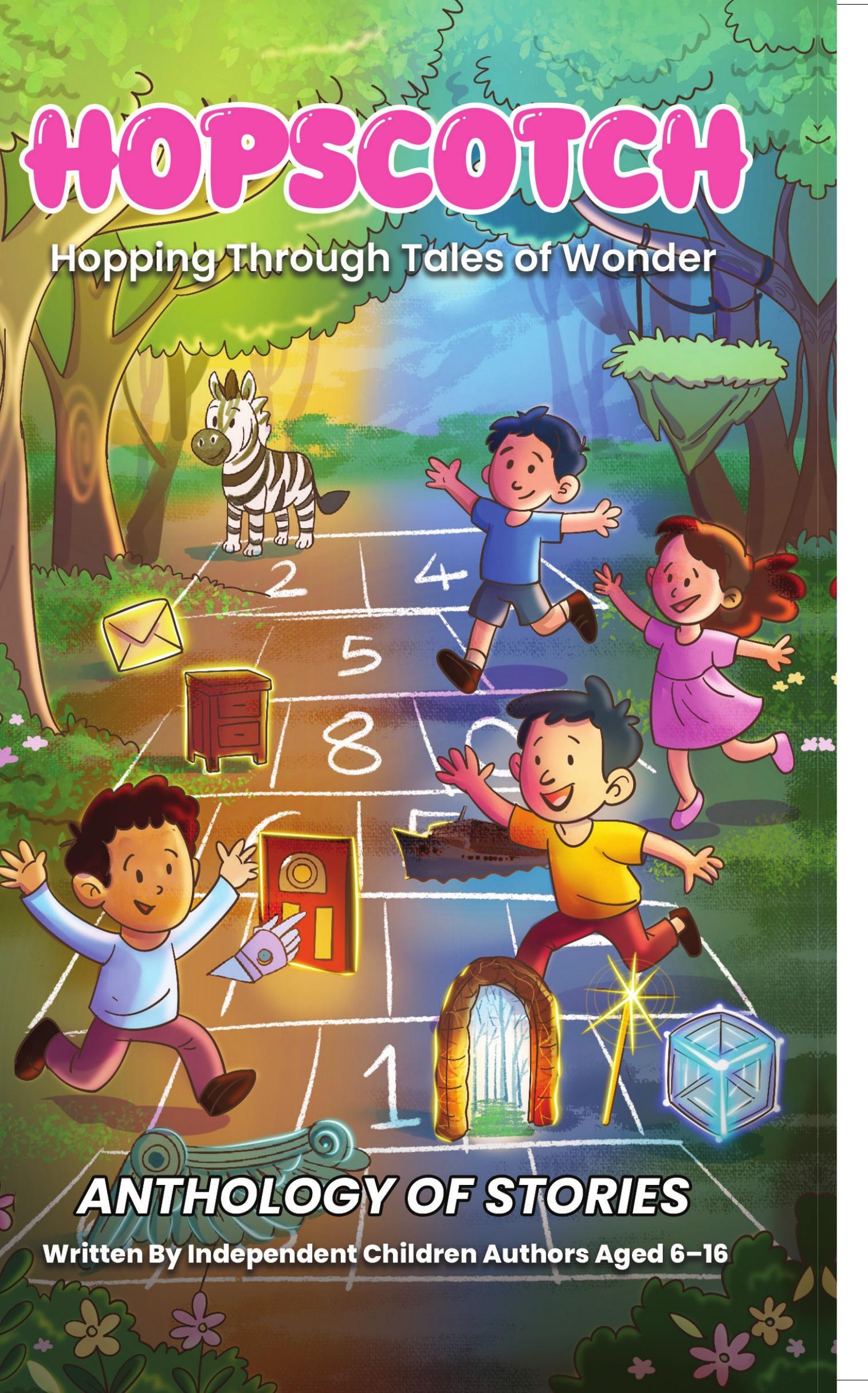
The title came out of the work. The stories hop between worlds, so we called it Hopscotch. That felt right in a way we hadn't planned.
What a real ISBN means to a child
Before we published Hopscotch, I had a theory about what it would mean to a child to have their name on a book with a real ISBN, in a bookstore, on Amazon. The theory was mostly about the object: the physical thing a child could hold up and say, that is mine.
What I understand better now is that it is not about the object. It is about confirmation. A school assignment is assessed. A published book is taken seriously. Children know the difference between those 2 things, and they respond differently to them.
We made some things harder than they needed to be the first time. Coordinating 9 children across multiple cities and families and timelines takes a specific kind of patience that we have since learned. The logistics are manageable. But the core of what Hopscotch taught us has not changed since.
Our most important job is not to improve these stories. It is to take them seriously enough to leave them intact.
Hopscotch is 9 names on a cover. That is still the clearest description of what we are trying to do.
Not ready yet? Get the free parent's guide
Plain answers and honest prices, free by email.