There is a moment, somewhere between the proof copy arriving and the book going to print, when a child turns to the contents page and finds their name. Not alone. Alongside 8 others, or 11, depending on which book. That moment teaches something no writing class does.
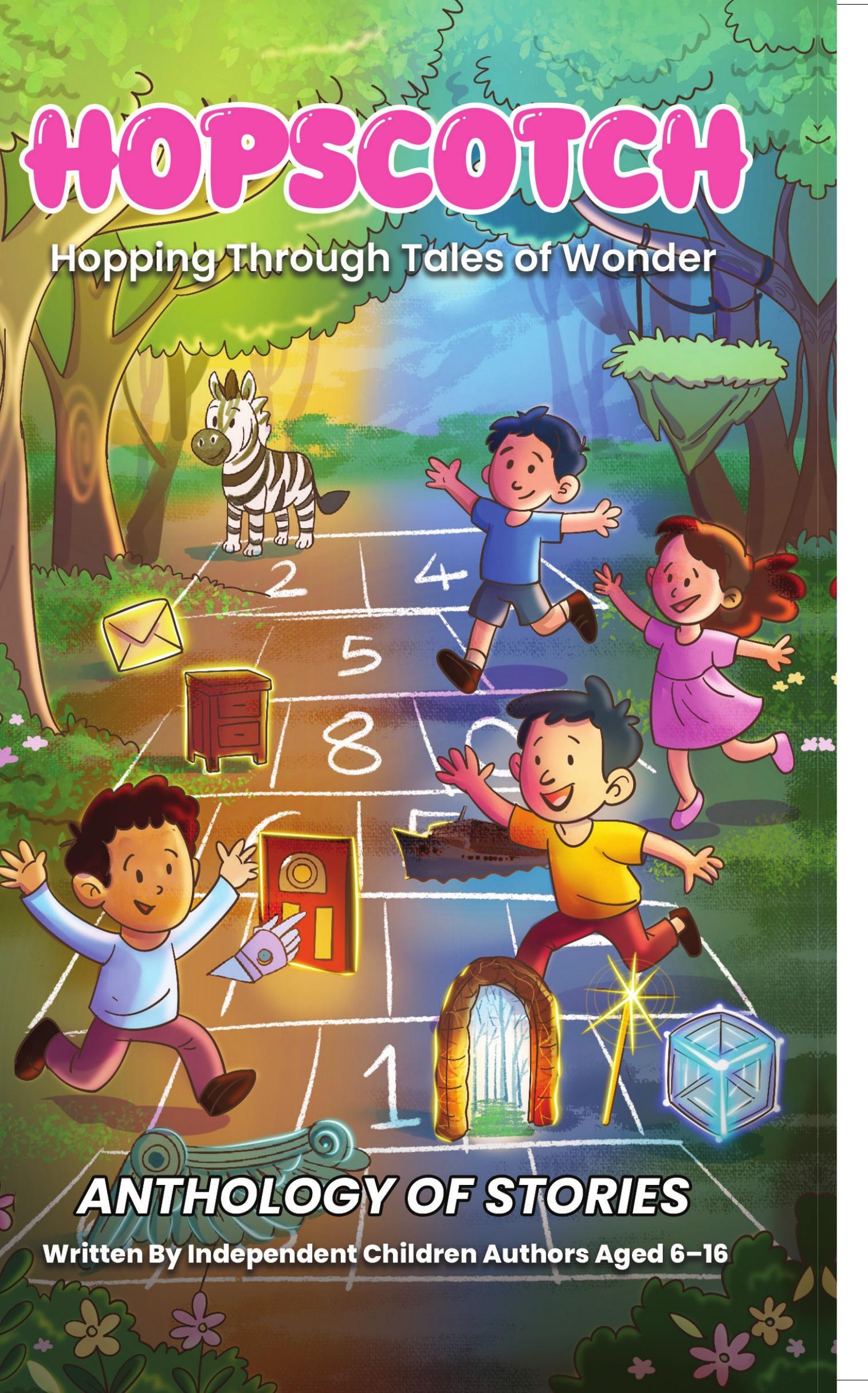
We have published 2 anthologies now. Hopscotch, with 9 young authors. Whispers of Many Worlds, with 12, ranging from age 7 to 16. What we have learned from working with both is that the anthology format does specific things to a young writer that solo work does not.
A deadline you cannot move
A story in a notebook can stay unfinished forever. A story going into an anthology cannot. The deadline exists. The other 8 or 11 contributors have their own, and the book waits for no one.
This is the first thing the anthology teaches: that finishing is a skill, and it is separate from having an idea. A lot of children have good ideas. Fewer have sat with a story long enough to find its ending, and fewer still have done it by a date that was fixed months before they knew how the plot would resolve.
An edit that is not praise
When a teacher reads a child's story, they are often trying to encourage. When a parent reads it, they are trying to love it. Both responses are valuable. Neither is what an editor does.
An editor reads the story and asks whether the beginning does what it needs to do, whether the middle loses the reader, whether the ending earns its feeling. These questions can be uncomfortable, and they should be. The discomfort is the lesson.
Our anthology contributors go through a real edit. Their stories come back with marks on them. Most of them do not resist this. The good ones ask why.
What the contents page teaches
A child who reads only their own story in isolation can only measure it against their own previous work. A child who reads their story alongside 8 or 11 others has a richer comparison. Not competitive. Comparative.
Aanya Taneja, who is 11, writes across galaxies and generations. Aarjav Amit Singh, who is 9, writes with a detective's eye for detail. Ayaansh Aggarwal, who is 10, writes with the warmth and plain-spokenness of the storyteller he admires most, Sudha Murthy. These voices exist beside each other in Hopscotch, and each one is sharpened by the company it keeps.
Ridhvi Bansal appears in both our anthologies. Hopscotch, then Whispers of Many Worlds. She writes time-bending adventures about people coming together to protect the world they share. What she gains from the second anthology that she did not have from the first is the knowledge of the whole process: the deadline, the edit, the wait for the proof, the moment of finding your name on a new contents page. The second time through, it is less frightening. You know you can finish. You know an edit does not undo you.
That knowledge is what we are really publishing when we publish an anthology. Not just the stories. The proof, for each child who made it through, that they can do it again.
Hopscotch and Whispers of Many Worlds are both on Amazon and in bookstores. If you have a child who is writing and wondering whether they are ready for something like this, the honest answer is: the anthology will tell them. That is the whole point of it.
Not ready yet? Get the free parent's guide
Plain answers and honest prices, free by email.